
Subscription Series

Saturday March 16, 8pm

Sir John Clancy Auditorium UNSW

Vincent d’INDY (1851-1931):
Chanson et danses Opus 50 for flute, oboe, two clarinets, horn and two bassoons (1898)
Gioachino ROSSINI (1792-1868):
From Sins of Old Age (Péchés de Vieillesse) arr. Ian Munro for flute, clarinet and piano (1857-1868)
Giuseppe VERDI (1813-1901): 
String Quartet in E minor (1873) - 200th anniversary of the composer’s birth
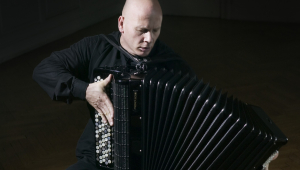
A James CRABB gallery of music for accordion, flute, clarinet, two violins, viola, cello and piano, with works by:
Torbjörn Iwan LUNDQUIST (1920-2000)
César FRANCK (1822-1890)
Jukka TIENSUU (b 1948)
Antonín DVORÁK (1841-1904)
Astor PIAZZOLLA (1921-1992)

Vincent d’Indy, the idealistic, serious and hard-working founder of Paris’s Schola Cantorum, allows himself to relax enjoyably in the melodiously pastoral piping of a wind septet in his Opus 50 song and dances. Rossini, after a phenomenally hectic career as an opera composer, sprinkles his long retirement in the environs of Paris with delightful pieces that he liked to refer to as the sins of his old age; from which Ian Munro has chosen a few for witty instrumental arrangement and conflation. Our players will certify, if asked, that James Crabb’s suite of unrelated pieces from Sweden, Belgium, Finland, Bohemia and Argentina, in plausible and enlightening partnership with his own spellbinding accordion playing, is a moral certainty to be a musical festivity in its own right. Verdi, whose 200th birthday belongs to 2013, includes so many reminders of the pleasures of Italian opera in his solitary and admirably composed string quartet that he will be a more than congenial musical guest in this program.
 Guest artists: James Crabb, accordion; Huw Jones, oboe; David Howie, clarinet; Robert Johnson, horn; Andrew Barnes, Tony Liu, bassoons.

Saturday April 20, 8pm

Sir John Clancy Auditorium UNSW

Josef SUK (1874-1935): 
Piano Quartet in A minor (1891)
Ross EDWARDS (b 1943):
Ecstatic Dances, arr. for flute and clarinet by Roger Armstrong (1990)
Witold LUTOSLAWSKI (1913-1994):
Dance Preludes for flute, oboe, clarinet, horn, bassoon, violin, viola, cello and double bass (1954/59)
Antonín DVORÁK (1841-1904):
String Quintet in G major for two violins, viola, cello and double bass (1875)

 
The Czech composer Josef Suk married DvoÅ™ák’s daughter Otilie, so that – as you can see in the program list above – a composing son-in-law and his composing father-in-law begin and end the Australia Ensemble’s April program. That family connection (sadly severed by Otilie’s early death) is less important than the fact that both composers declare in their very individual ways a profound love of the irresistible spirit of Czech musical and dance traditions. Dance and its instrumental distillations are key elements in this program. Ross Edwards communicates his audible pleasure in the kind of danceable impulse conjured up by offbeat accents and lilting syncopations. The Polish Witold Lutosławski, one of the composers recognised as masters in the annals of 20th century music, draws on his own national inheritance in his superlatively crafted Dance Preludes.
Guest artists: Huw Jones, oboe; Robert Johnson, horn; Andrew Barnes, bassoon: Kees Boersma, double bass

Saturday May 18, 8pm

Sir John Clancy Auditorium UNSW

 Ian MUNRO (b 1963): 
String Quartet No 2 - A Colonial Sketchbook (2010)
Carl NIELSEN (1865-1931): 
Wind Quintet Opus 43 (1922)
Eugene GOOSSENS (1893-1962): 
Pastorale and Harlequinade Opus 41 for flute, oboe and piano (1924)
Johannes BRAHMS (1833-1897): 
Piano Trio No 3 in C minor Opus 101 (1886)

The word bucolic is sometimes taken beyond its simple reference to pastoral genres to seem to promise earthy good fellowship and a preference for vigour over subtlety. To some extent that additional meaning is appropriate to the character of the Wind Quintet of Carl Nielsen, who was brought up in a Danish rural community and who understood country life better than most people. If bucolic is meant to be a not-so-subtle putdown, however, its use needs to be balanced by an understanding of the high stature of Nielsen as a musical poet. Ian Munro’s second String Quartet, subtitled A Colonial Sketchbook, is a work in which this deftly allusive composer and outstanding pianist typically looks at relatively bucolic societies of the past with a mixture of historical sympathy and discerning nostalgia. Eugene Goossens adds unmistakably sophisticated French touches to his sketch of pastoral theatre and improvised Italian comedy. Brahms, a lord of majestic and powerful gesture, is also utterly as at home with a pastoral reverie, demonstrating all of these capacities with remarkable succinctness in his C minor Piano Trio.
Guest artists: Shefali Pryor, oboe; Robert Johnson, horn; Andrew Barnes, bassoon

Saturday August 10, 8pm

Sir John Clancy Auditorium UNSW

Gabriel PIERNÉ (1863-1937): 
Sonata da camera Opus 48 for flute, cello and piano (1927)
Richard Rodney BENNETT (b 1936): 
Winter Music for flute and piano (1960)
Benjamin BRITTEN (1913-1975): 
String Quartet No 1 in D (1941) – 100th anniversary of the composer’s birth
Carl Maria von WEBER (1786-1826): 
Clarinet Quintet in B flat Opus 34 J182 (1811-1815)

Carl Maria von Weber, who liked to draw attention to his cousinly relationship to Mozart’s wife (another Weber), follows the Salzburg-born master in being inspired to write memorably for the clarinet by the example of a particular musician, in this case the Munich-based Heinrich Baermann. Weber’s Clarinet Quintet may not scale Mozartian heights but it is an adroitly entertaining piece of music, thrilling at times in its unashamed virtuosity. Britten’s first String Quartet, a product of his short stay in the United States as a young man, immediately shows a mastery of original string texture and idiomatic quartet writing, closing with a movement of conversational wit. Another British composer of precocious gifts, Richard Rodney Bennett, manages to evoke thoughts of winter without seeming frigid or cramped; and Gabriel Pierné, composer, first conductor of Stravinsky’s Firebird and himself a memorable contributor to Parisian ballet music, affirms the French national love affair with the flute, in agreeable companionship with cello and piano. This program starts benignly and finishes with the attention-getting skill of a high-wire act in Weber’s Clarinet Quintet.

Saturday September 7, 8pm

Sir John Clancy Auditorium

Johann Sebastian BACH (1685-1750): 
Sonata in B minor for flute and keyboard BWV1030 (c1736)
Richard STRAUSS (1864-1949): 
Metamorphosen (Transformations) arr. Rudolf Leopold for string septet (1945)
Claude DEBUSSY (1861-1918): 
Première rapsodie (1909/10) and Petite pièce (1910) for clarinet and piano
Francis POULENC (1899-1963): 
Sextet for flute, oboe, clarinet, horn, bassoon and piano (1932/9)

Bach’s B minor Flute Sonata BWV1030 comes complete with an obbligato (i.e., fully written-out) keyboard part that suits the Australia Ensemble’s chosen era of performance and interpretation and makes for, we think, a highly satisfactory partnership on concert grand piano and modern flute. Richard Strauss’s Metamorphosen (Transformations) is a master composer’s deeply felt lament at the end of World War II for the lost world and tradition for which he had produced so much of his greatest music. Debussy liked to contrast French ways of thinking in music with those of Austro-German composers and duly supplies in two short pieces a melodic charm which is unmistakably French while not attempting to represent French music in its most high-flying moments; and Poulenc’s Sextet for piano and winds cheerfully runs the risk of placing its sentiments nearer the surface in graceful, high-spirited and, at times, uproarious fashion.
Guest artists: Yvette Goodchild, viola; Timo-Veikko Valve, cello; Andrew Meisel, double bass; Huw Jones, oboe; Robert Johnson, horn; Andrew Barnes, bassoon

Saturday October 12, 8pm

Sir John Clancy Auditorium UNSW

Benjamin BRITTEN (1913-1976): 
Sinfonietta for flute, oboe, clarinet, bassoon, horn, two violins, viola, cello and double bass (1932) – 100th anniversary of the composer’s birth
Béla BARTÓK (1881-1945): 
Contrasts for violin, clarinet and piano (1938)
Nigel BUTTERLEY (b 1935): 
Remembering Pierrot, new work for the Australia Ensemble @UNSW, commissioned by Dr Patricia Brown – first performance*
*This project has been assisted by the Australian Government through the Australia Council for the Arts, its arts funding and advisory body.
Felix MENDELSSOHN (1809-1847): 
Piano Trio in D minor Opus 49 (1839)

 
The three Bs whose music enlivens the first half of this program are not the usual ones cited in some central European tallies of musical excellence but possess in abundance their own mastery and distinction. Bartók’s Contrasts, commissioned by the famous jazz player Benny Goodman in the 1930s, is a viscerally exciting personification of instrumental characters in active combat and occasional reconciliation. Britten was a very young composer when he showed in his Sinfonietta for ten instruments how completely he was in control of animated, fresh-sounding musical dialogue. The commissioning of a new work from Nigel Butterley recognises a leading Australian composer whose special gifts include an ability to find Eliot’s visionary ‘crowned knot of fire’ as the outcome of a passionately felt musical quest. Mendelssohn seems to have been born with or developed almost all the talents, distinctions or blessings accessible to human beings. Though he missed out on a long life, his D minor Piano Trio is one of a list of surviving works of an entirely dazzling beauty, securely based in his own extraordinary abilities as pianist and composer.
Guest artists: Shefali Pryor, oboe; Robert Johnson, horn; Andrew Barnes, bassoon; Andrew Meisel, double

2013 Subscription dates

  1. Saturday March 16th
  2. Saturday April 20th
  3. Saturday May 18th
  4. Saturday August 10th
  5. Saturday September 7th
  6. Saturday October 12th